I don’t know that I’ve ever loved a plant this much.
Jump To
- How I Found It
- Why Zizotes Belongs Here
- The Milkweed Problem Nobody Talks About Loudly Enough
- How to Harvest Zizotes Seeds
- Finding It Was the Beginning
- Frequently Asked Questions
How I Found It
I found it in the lawn a couple of years ago.
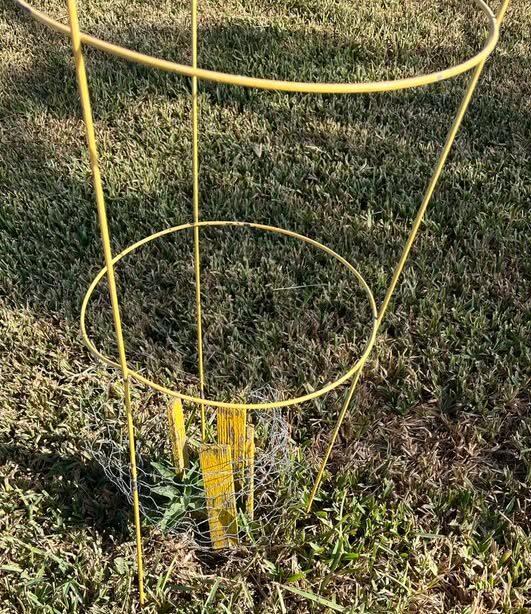
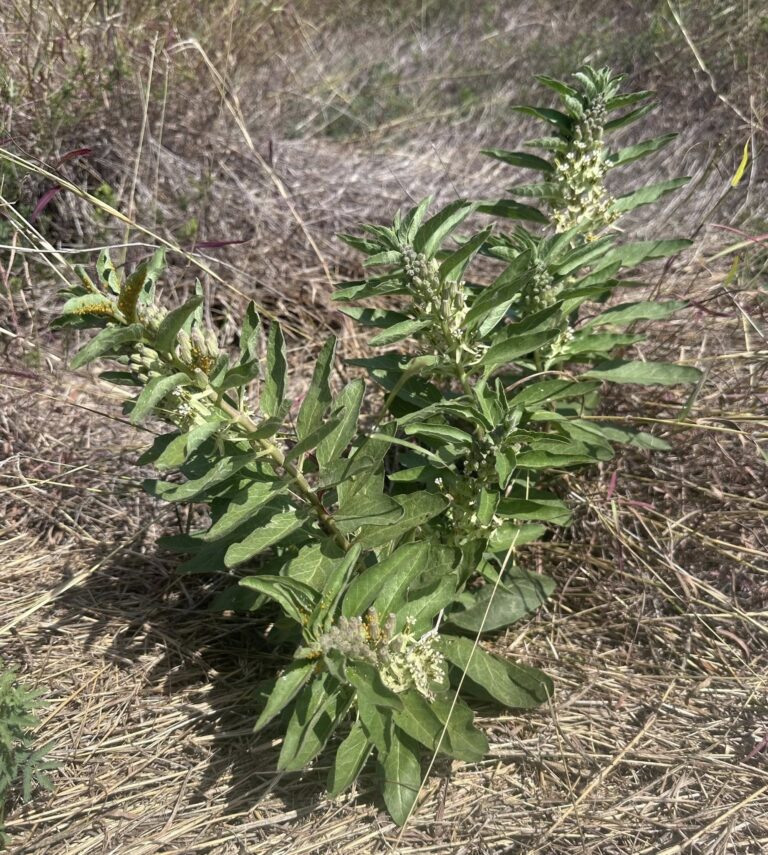
I recognized the leaves enough to know it was Zizotes milkweed (Asclepias oenotheroides) and decided to leave it alone. I put a tomato cage around it to protect from accidental mowing.
Told my family: this stays. Don’t even get close to it!
This is only its second year in the tomato cage.
But it is much older than that.
How do I know? It gets huge. Last year it soared above two feet tall and just as wide. It has been here far longer than I realized, probably mowed over for years without a second thought.
Perennial milkweed roots can survive 10 to 20 years underground, just waiting for the right moment. Or in this case, the right person.
Why Zizotes Belongs Here
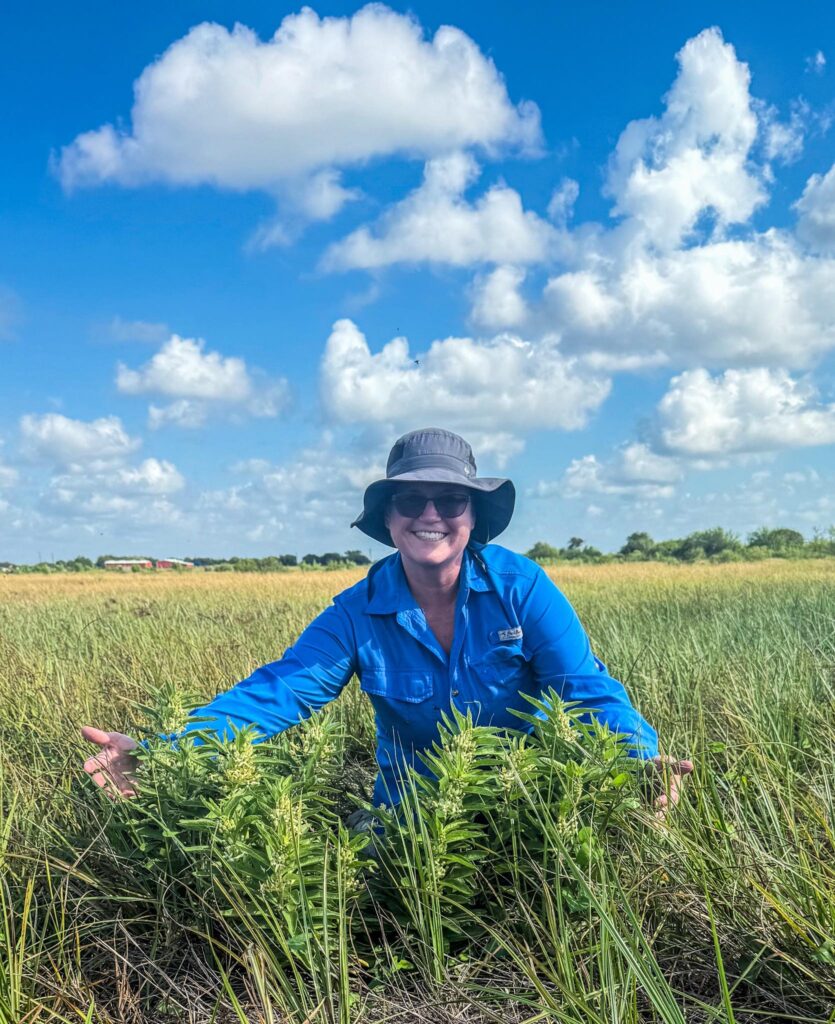
When I started Tejas Prairie in 2022, I left a large commercial growing operation because something was missing. We were growing plants, but we were not growing the right plants.
Nobody in South Texas was showcasing native milkweed. Nobody was talking about NATIVE milkweed. The big box stores were full of tropical milkweed or “butterfly” weed in plastic pots, treated with systemic pesticides, looking perfect on the shelf and doing real damage to the monarchs people were trying to help. I knew this, but did others?
Zizotes milkweed was growing wild in lawns and roadsides all across South Texas and the entire Gulf Coast. Yet it was being mowed over every week by people who had no idea what they had.
That gap between what was growing here and what people knew about it was why Tejas Prairie exists.
What makes zizotes different from everything else being sold as milkweed right now:
It belongs here. Zizotes evolved alongside monarchs in this region. It is part of the ecological system that existed long before landscaping was invented. When you plant it, you are not adding a new element. You are restoring one that was always supposed to be there.
It is drought tolerant. In South Texas, this matters more than almost anything else. Zizotes handles our brutal summers, our clay soil, our feast-or-famine rainfall. It does not need babying. It needs to be left alone.
It spreads from deep perennial roots. Once established, zizotes comes back every year from the same root system. Those roots can persist for decades underground even when the above-ground plant is mowed, grazed, or cut back. This is why the plant I found in my lawn was so much older than it looked. The roots had been there for years, waiting.
It is native to the Central Flyway. Zizotes milkweed is native to the South Texas Plains, the Gulf Coast, and through much of the southwestern United States into Mexico. It is one of the most important milkweed species for monarchs on the Central Flyway, the migration corridor that funnels millions of monarchs through Texas every spring and fall.
The Milkweed Problem Nobody Talks About Loudly Enough
Every spring I watch it happen.
Someone posts a photo of their monarch garden, proud and hopeful. The plant in the photo is tropical milkweed (Asclepias curassavica). Someone points it out. An argument starts. Nobody wins.
I stopped arguing about it in garden groups years ago. But I will say it plainly here.
The milkweed at most big box stores is almost always tropical milkweed. It is not native to Texas or anywhere in the United States. It was brought here from Mexico and Central America. It looks beautiful, blooms reliably, and stays on shelves perfectly because it has been treated with systemic pesticides called neonicotinoids. (TIP: If you don’t notice aphids on any part of the milkweed plant, it’s most likely treated with neonicotinoids.)
Neonicotinoids are not a surface spray you can wash off. They are taken up into the plant tissue. The leaves. The flowers. The nectar. Everything a monarch touches on that plant carries the chemical.
Commercial growers are not villains. They are part of a system that demands picture-perfect plants with a long shelf life, and pesticides make that possible. The problem is that Texas does not require growers to label milkweed plants when systemic pesticides have been used. So the person buying with the best intentions has no way of knowing.
The solution is not to shame people. The solution is to plant what actually belongs here.
Zizotes milkweed does not need pesticides to thrive. It does not need to look perfect at the nursery. It needs Texas soil, Texas heat, and a little patience.
How to Harvest Zizotes Seeds
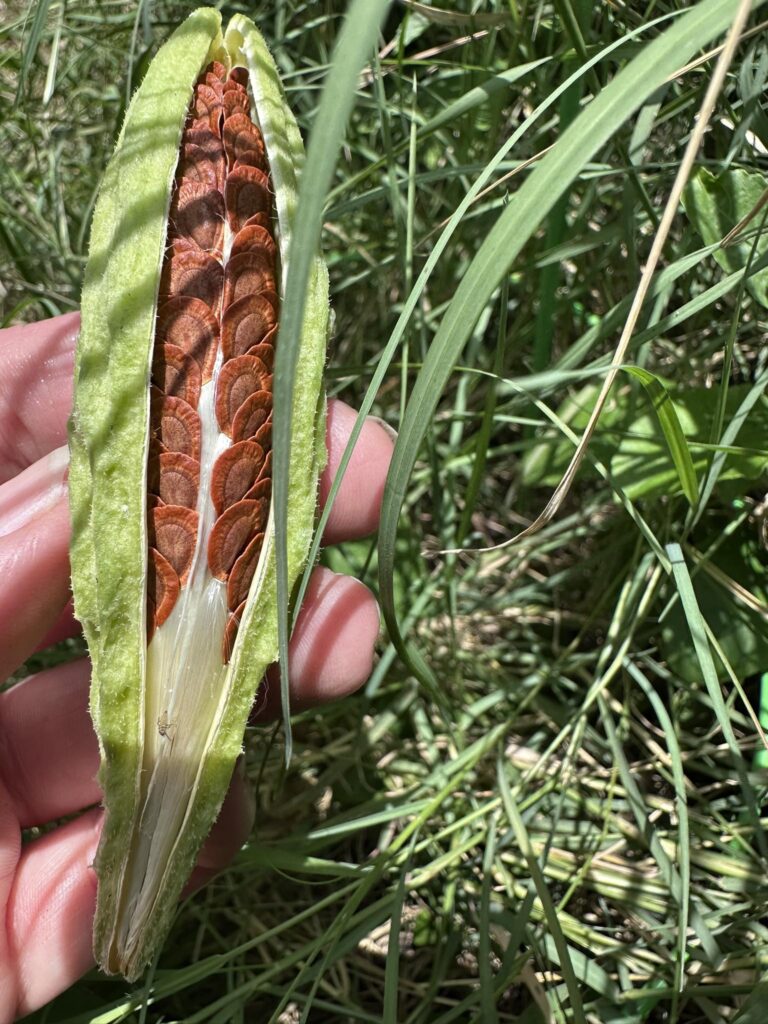
One of the most rewarding things about growing zizotes milkweed is that once you have it, you can spread it. The seed pods are easy to harvest and the seeds store well.
Here is how to do it:
- Watch for the pods to start splitting open naturally. That is your sign they are ripe.
- Gently open the pod and separate the silky fluff (called the coma) from the brown seeds underneath. A paper bag is your best tool: drop the pods in, shake it up, and let the fluff rise to the top. The clean seeds settle at the bottom.
- Do this on a dry day so the seeds do not mold.
- Store in a paper envelope or open container in a cool, dry place. Avoid plastic bags — trapped moisture kills viability.
- Share them. That is the whole point. Zizotes seeds are how you put this plant back in neighborhoods and yards where it was mowed out of existence for decades.
A paper bag is the perfect tool for separating the fluffy coma from the seeds that would otherwise blow away on the wind.
Finding It Was the Beginning
I did not build Tejas Prairie because I had a business plan. Far from it actually!
I built it because I found a plant growing in my lawn that nobody was talking about, and I could not stop thinking about all the other lawns in South Texas where that same plant was being mowed over every week without anyone knowing what they had.
The roots were always there.
They were just waiting to be seen.
That is what native restoration actually looks like. Not a Pinterest garden. Not a perfect pollinator patch with matching labels and mulch. It looks like a tomato cage in the grass around a plant that has been quietly surviving for longer than anyone realized.
Frequently Asked Questions
Where can I find zizotes milkweed to plant? If you are in South Texas or along the Gulf Coast, start with local native plant nurseries — they are your best shot at getting a regionally appropriate plant that was NOT treated with systemic pesticides. Native plant societies in your area often do seed swaps too, and that is honestly the best way to source locally grown seed.
You can also grow from seed. Watch for pods splitting open on roadside plants in late summer and fall. Collecting seed from public roadsides is allowed in many areas for personal use, but rules vary by state and land ownership — check your state’s regulations before you harvest. And know that collecting plants or seeds inside state or national parks is prohibited regardless of where you live, even when the species is native.
Not in South Texas? Look up what milkweed species are native to your specific region before you buy anything. The USDA PLANTS Database will tell you exactly what belongs where you live. Find a native plant grower in your area who knows their local ecology, and build that relationship. They are worth their weight in seed.
Is zizotes milkweed good for monarchs? Yes. It is one of the primary milkweed species for monarchs migrating through the Central Flyway. Because it is a perennial and goes dormant in winter, it does not create the year-round residency issues associated with tropical milkweed in mild climates.
Does zizotes milkweed spread? It spreads slowly from its root system and can also spread from seed. It is not aggressive. Most people find it much more restrained than they expected.
Can I grow zizotes milkweed outside of South Texas? Zizotes milkweed grows across a wide range including the Gulf Coast, much of Texas, Oklahoma, New Mexico, and into Mexico. Check the USDA PLANTS Database for the full native range before planting.
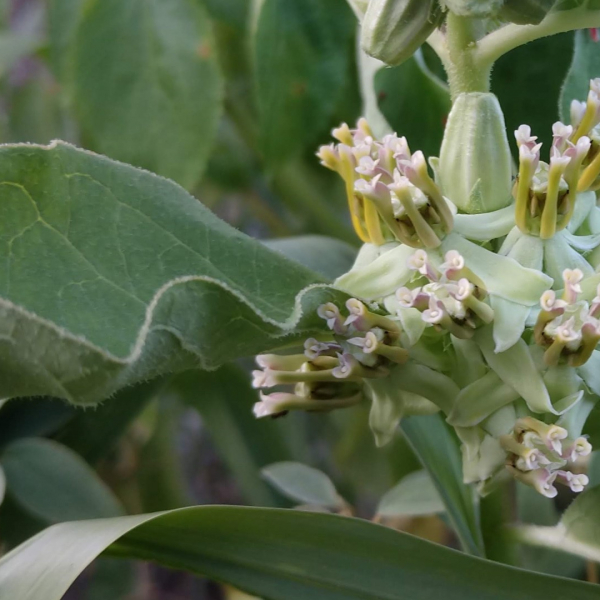
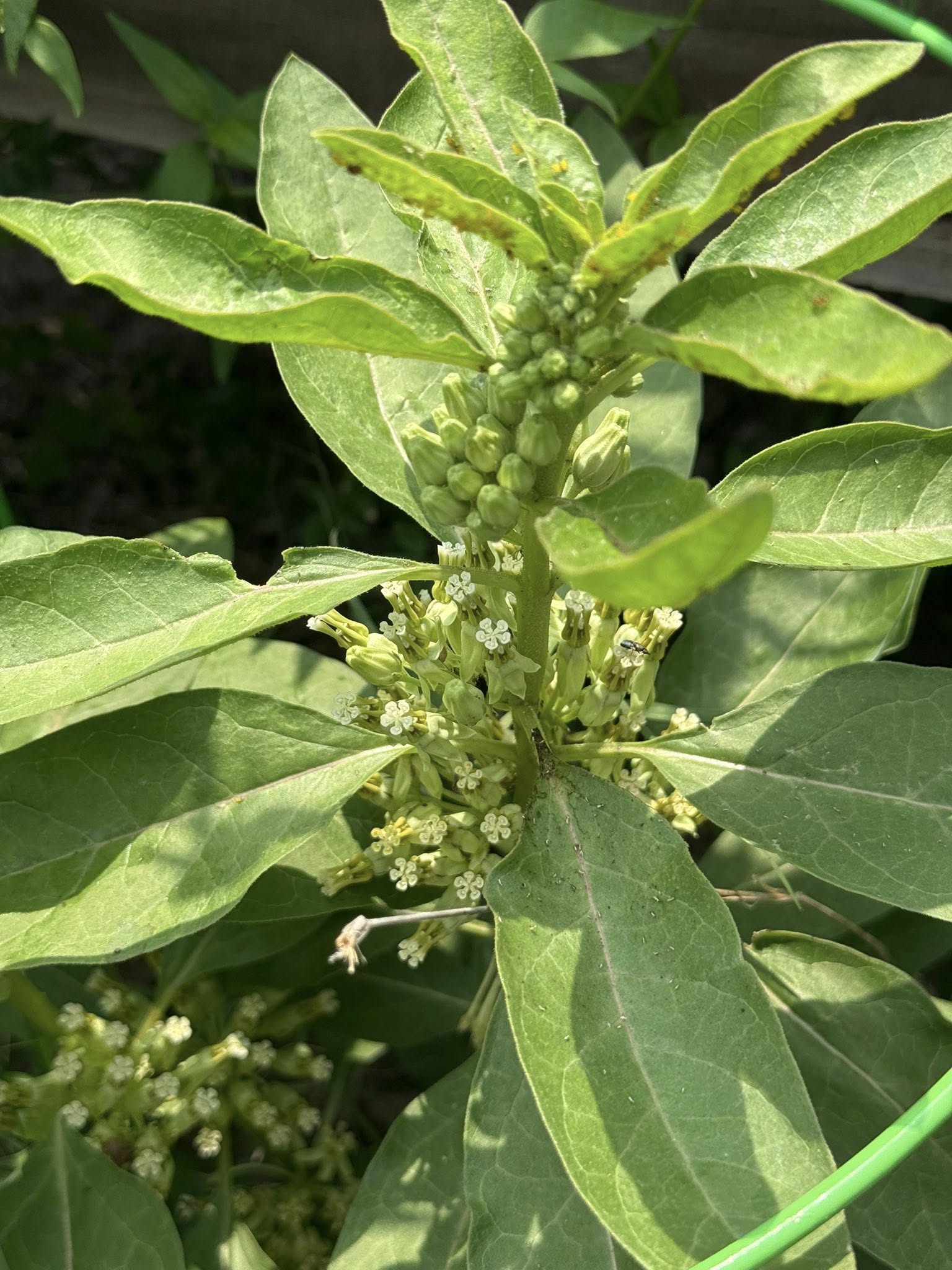
What does zizotes milkweed look like? The leaves are broad and slightly wavy with visible veining. The flowers are small, pale greenish-white, and clustered at the top of the stem — nothing like the showy orange tropical milkweed sold at big box stores. The whole plant has a soft, fuzzy texture. It does not look exotic. It looks like something that belongs in a Texas lawn, because it does.
Full Plant ID
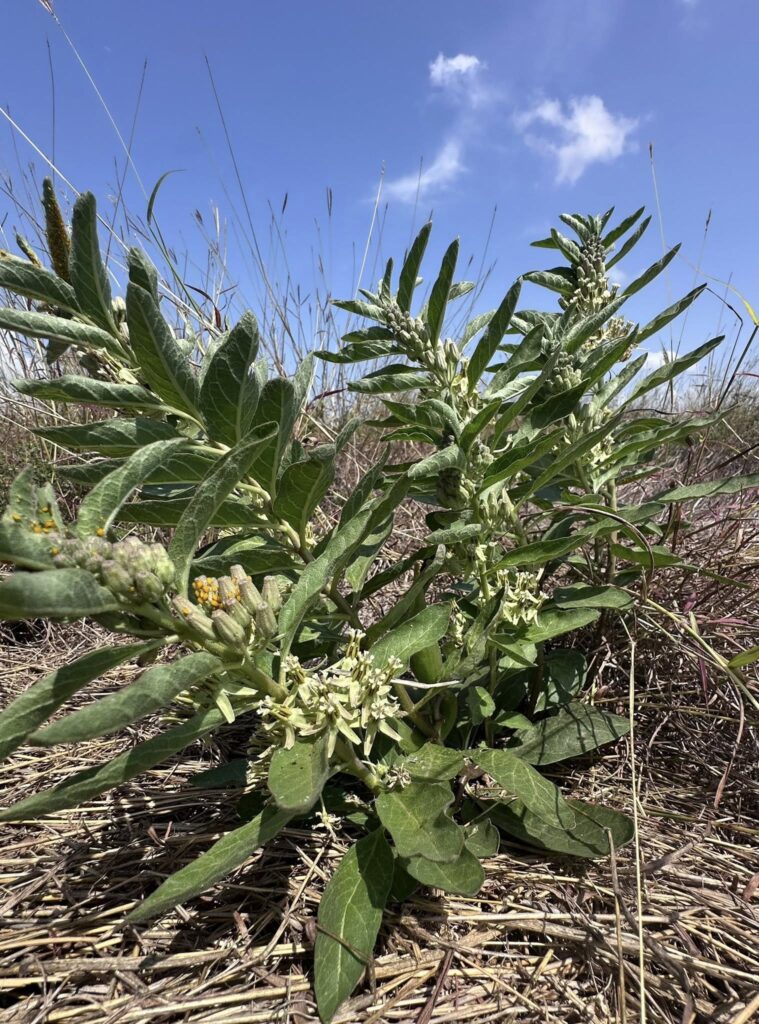
Zizotes milkweed growing in South Texas. Broad leaves, upright stem, flower buds forming at the top — this is what you are looking for in a lawn or roadside.
The Flowers
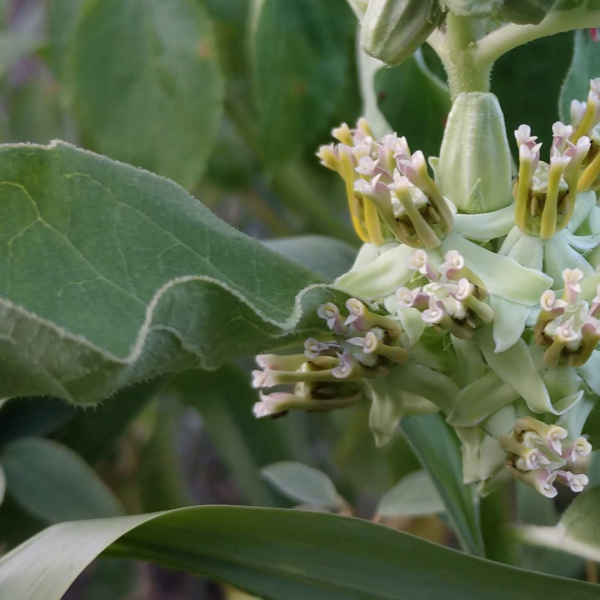
The flowers are pale greenish-white and clustered. Not showy. Not orange. If you were expecting tropical milkweed, this will surprise you and that is the point.
The Leaves
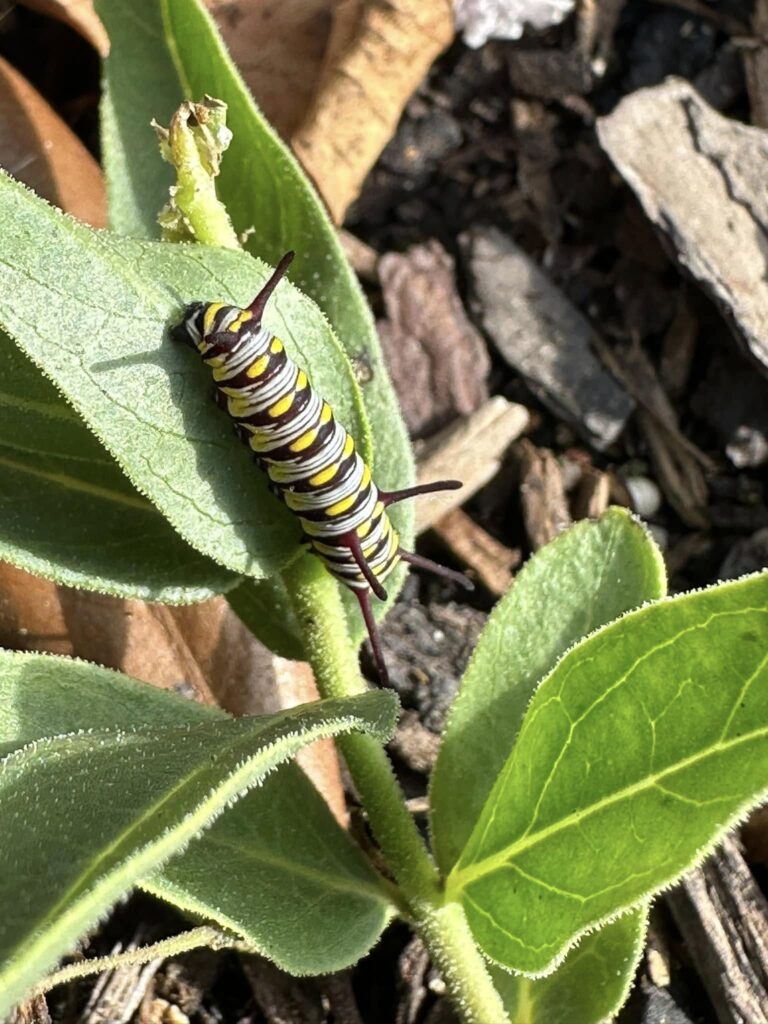
Broad, slightly wavy, with a soft fuzzy surface. The leaf texture is one of the easiest ways to identify zizotes in the field.